Storm damage
Storm Damage Restoration Requests
Tropical systems and summer thunderstorms put water into buildings from directions they were never designed to handle. Tell us where it got in and what is wet.
Storm-related request types
- Wind-driven rain intrusion around windows, doors and soffits
- Roof leak and missing shingle water damage
- Tree impact openings and resulting water intrusion
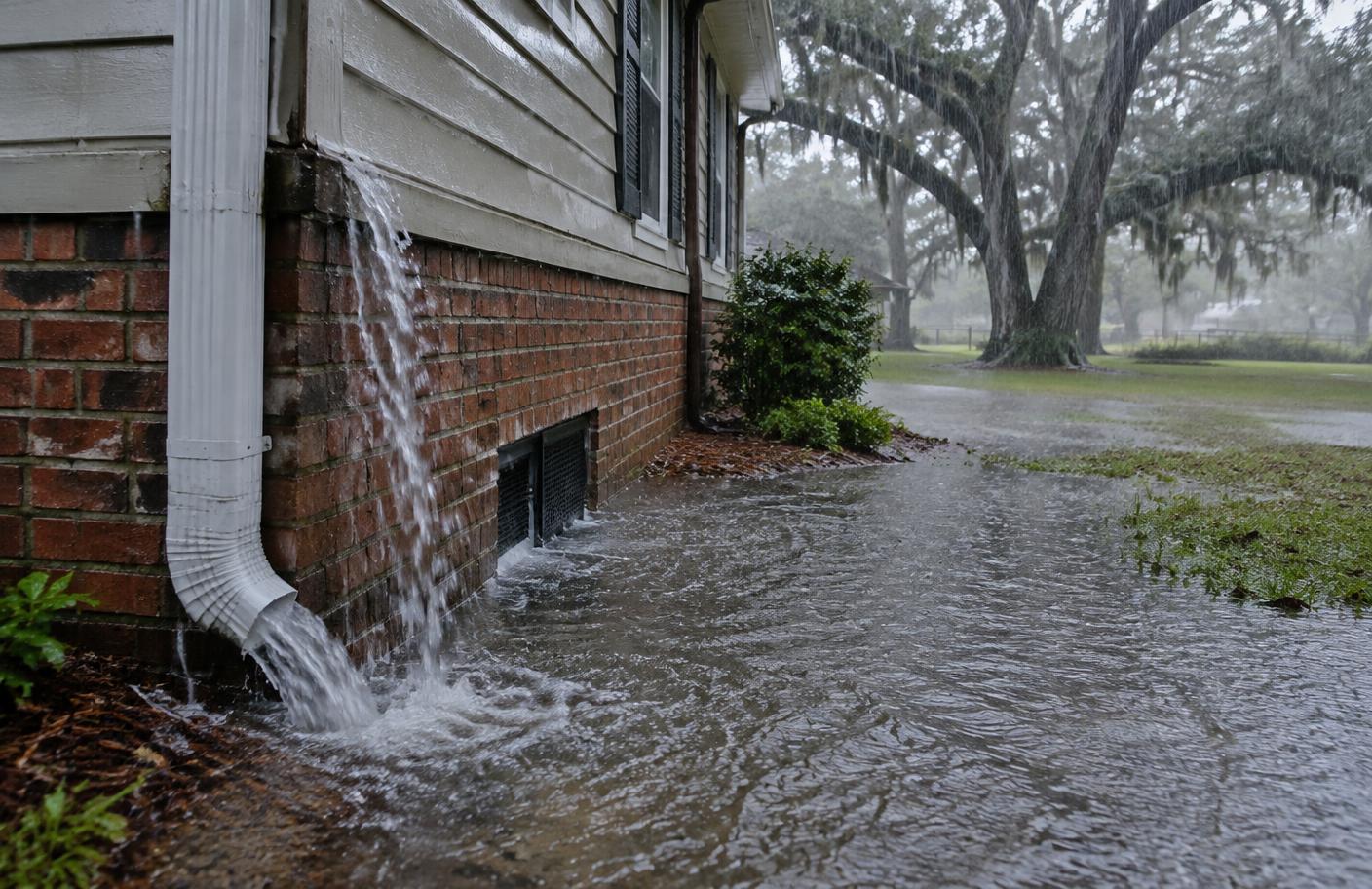
- Flooding and yard water entering the structure
- Crawlspace flooding after heavy rainfall
- Post-storm structural drying and dehumidification
- Storm-related mold problems discovered later
How storms damage buildings in this region
The Big Bend sees both patterns: long, saturating rain from tropical systems and short, violent convective storms that drive rain sideways. Sideways rain finds weaknesses that vertical rain never touches — soffit vents, window head flashing, siding laps, gable vents. Saturating rain overwhelms drainage, raises the water table and pushes moisture into crawlspaces and slab edges.
Tree cover is the other regional factor. Mature canopy is one of the best things about property here and one of the biggest liabilities in a windstorm: limbs open roofs, and root systems and shade keep soil damp long after the rain stops.
Damage that shows up weeks later
Not every storm problem is obvious the next morning. Wet insulation in an attic or wall cavity can dry slowly enough to grow mold before anyone notices staining. Buckled flooring, a musty smell, or a ceiling stain that appears after the next rain are all worth a request, even if the storm was a month ago. Mention the storm date in your description.
Related requests
FAQ
Storm damage questions
Tell us what happened.
One request form covers every category. If you are not sure what you are dealing with, describe the damage and we will route it from there.